Why Temperature Monitoring Matters
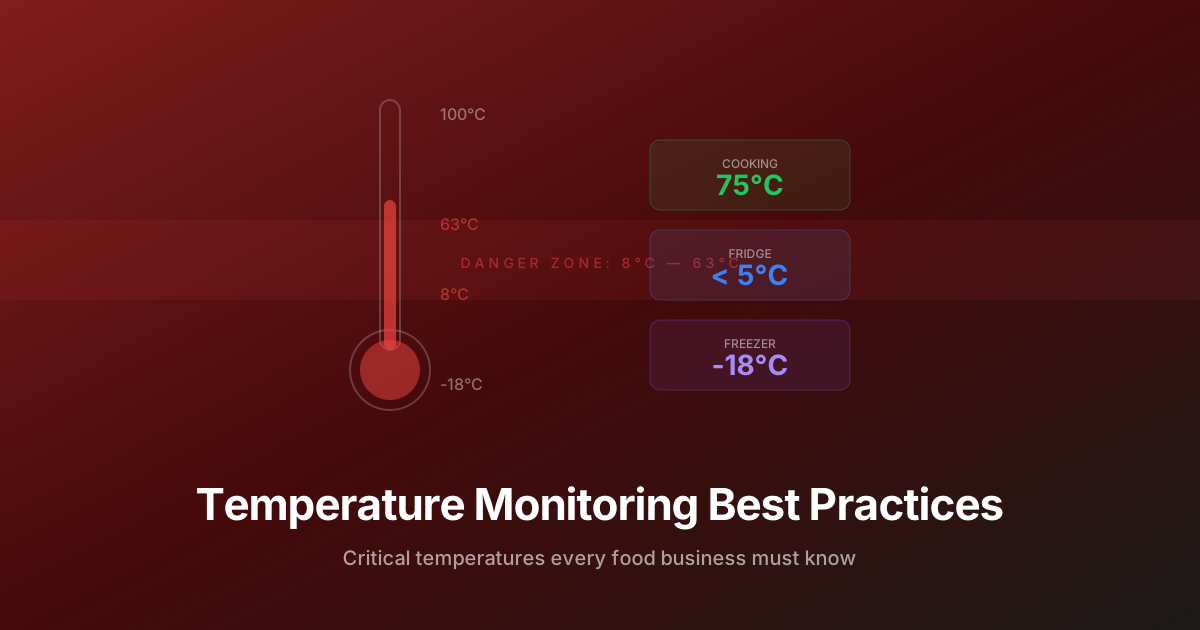
Temperature control is one of the most critical aspects of food safety. The "danger zone" — between 8°C and 63°C — is where harmful bacteria multiply most rapidly. Food left in this temperature range for extended periods can become unsafe to eat, even if it looks and smells fine.
In the UK, food businesses are legally required to monitor and record temperatures as part of their food safety management system. EHOs will check your temperature records during inspections.
Critical Temperatures Every Food Business Must Know
| Process | Temperature | Notes |
|---|---|---|
| Cold storage (fridges) | Below 5°C | Check at least twice daily |
| Frozen storage | -18°C or below | Check daily |
| Cooking (general) | 75°C core for 30 seconds | Applies to most foods |
| Cooking (poultry) | 75°C core for 30 seconds | No pink meat, clear juices |
| Reheating | 75°C core within 2 hours | Only reheat once |
| Hot holding | Above 63°C | Check every 2 hours |
| Cooling after cooking | Below 8°C within 90 minutes | Use blast chiller if possible |
| Delivery checks | Chilled: below 5°C / Frozen: below -12°C | Reject deliveries outside range |
Building a Temperature Monitoring System
1. Equipment
Invest in a reliable probe thermometer (accurate to ±0.5°C) and calibrate it regularly. Many businesses also install wireless temperature sensors in fridges and freezers for continuous monitoring.
2. Schedule
- Opening checks: Record fridge, freezer, and prep area temperatures before service begins.
- During service: Check hot holding and cooking temperatures every 2 hours.
- Closing checks: Final temperature check before close. Record and flag any issues.
- Delivery checks: Check temperature of every chilled/frozen delivery before acceptance.
3. What to Record
For every temperature check, record:
- Date and time
- Equipment or food item
- Temperature reading
- Who performed the check
- Any corrective action taken (e.g., "Moved chicken to blast chiller — was at 12°C after 40 minutes")
4. Corrective Actions
When a temperature is outside the safe range:
- Document the issue immediately
- Take corrective action (re-cook, reheat, dispose, adjust thermostat)
- Record what action was taken and by whom
- Investigate the root cause to prevent recurrence
Common Temperature Monitoring Mistakes
- Not calibrating thermometers — An inaccurate thermometer gives false confidence. Calibrate weekly using ice water (should read 0°C) or boiling water (should read 100°C at sea level).
- Not recording corrective actions — EHOs want to see that you respond to problems, not just that you detect them.
- Inconsistent checks — Missing temperature checks create gaps in your compliance records.
- Not checking deliveries — If you accept a delivery at 9°C, the food may already be unsafe.
Going Digital with Temperature Monitoring
Paper temperature sheets are easy to lose, hard to read, and impossible to search. Digital temperature monitoring with SmartHaccp gives you real-time alerts when temperatures go outside safe ranges, automatic record-keeping, and one-click compliance reports for EHO inspections.
Try SmartHaccp free for 14 days and see how digital temperature monitoring simplifies your food safety compliance.